Flutter App Development Cost in India (2026): Full Price Breakdown

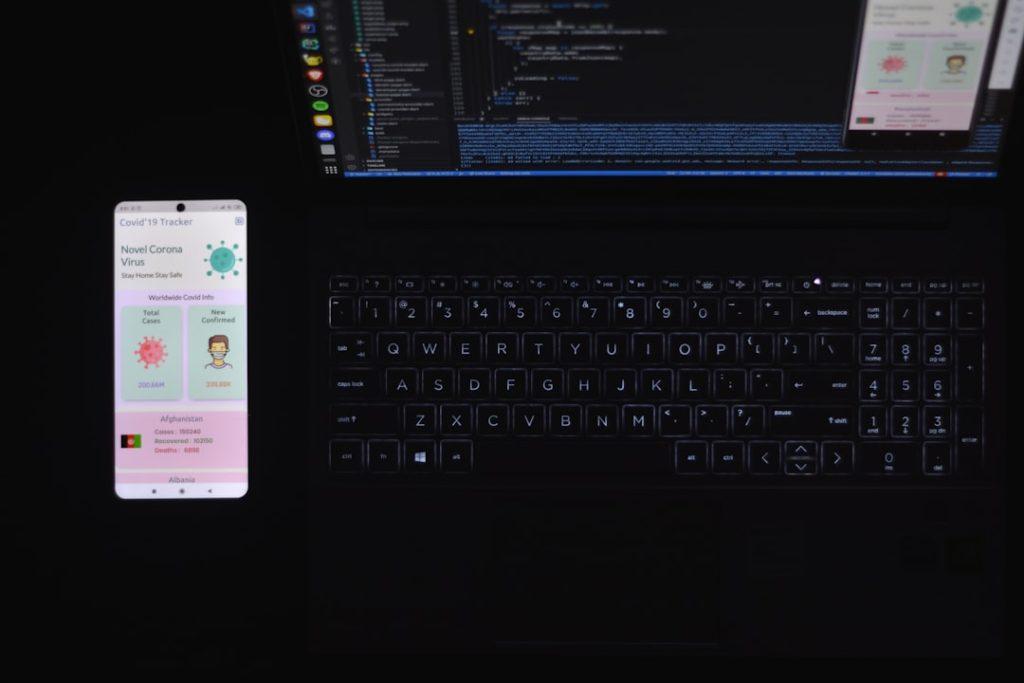
The Flutter app development cost in India typically runs between ₹1.5 lakh and ₹12 lakh or more in 2026, depending on complexity: simple single-screen utility apps sit at the lower end, while apps with authentication, payments, real-time features, and an admin panel push into the ₹4–12 lakh range. Enterprise-grade apps with custom backends and heavy integrations can cross ₹12 lakh. Flutter itself is free — the cost is entirely the team’s design, engineering, and QA time, not a licence fee.
What does a Flutter app actually cost in India in 2026?
If you’ve requested quotes and gotten numbers ranging from ₹80,000 to ₹15 lakh for what sounds like “the same app,” you’re not being scammed — you’re comparing apples to oranges. Two agencies quoting wildly different numbers are usually scoping different things: one is quoting a bare-bones MVP with a shared backend, the other is quoting a fully custom build with a dedicated server, admin panel, and ongoing support baked in. The fix isn’t to chase the lowest number; it’s to make every agency quote against the same written scope document so the numbers become comparable.
Because Flutter (Google’s open-source UI toolkit) costs nothing to use, “Flutter app development cost” is really shorthand for team cost and project scope. Three bands are useful to plan against:
- Simple app (a handful of screens, one API integration, no custom backend): roughly ₹1.5L–₹4L
- Mid-complexity app (user accounts, payments, push notifications, an admin dashboard): roughly ₹4L–₹12L
- Complex/enterprise app (custom backend architecture, multiple third-party integrations, high scale): ₹12L and up
These are general market ranges, not fixed prices — always ask an agency to justify a quote against the scope below, not just hand you a number.
Why do agencies price the “same” app so differently?
Three things quietly change the price without changing the marketing pitch: how much custom UI design is included versus a templated look-and-feel, whether the backend is being built from scratch or reused from an existing API/BaaS like Firebase, and whether QA is a dedicated pass on real devices or just “works on the developer’s phone.” A quote that looks 40% cheaper is very often missing one of these three — ask directly rather than assuming it’s just a better deal.
Why is Flutter usually cheaper than building native Android + iOS apps separately?
Flutter compiles one codebase to Android, iOS, web, and desktop, per the official Flutter documentation. Building natively means writing and maintaining two separate codebases (Kotlin/Java for Android, Swift for iOS) — effectively duplicating the frontend engineering effort. Flutter doesn’t eliminate the need for platform-specific testing and occasional native modules, but it typically cuts frontend build time meaningfully versus two native builds, which is where most of the cost saving comes from.
What determines the Flutter app development cost — simple app vs mid-complexity vs enterprise?
Five factors move the number more than the framework choice itself:
| Factor | Low impact | High impact |
|---|---|---|
| Design | Template-based UI | Fully custom UI/UX |
| Backend | Existing API / BaaS (Firebase) | Custom backend built from scratch |
| Integrations | None or one (e.g. payments) | Multiple (maps, payments, chat, analytics) |
| Real-time features | None | Live chat, tracking, notifications |
| Team location | Tier-2 city / freelancer | Metro agency with senior team |
What’s included in a real quote (design, backend, QA, store listing, maintenance)?

A transparent quote should break down: discovery and UI/UX design, Flutter frontend build, backend/API development, QA across Android and iOS versions, and app store submission. Store setup itself has small but real one-time and recurring costs: Apple charges $99/year for the Apple Developer Program (required to publish on the App Store), and Google charges a one-time Play Console registration fee to publish on the Play Store. If a quote skips any of these line items, ask why.
How much does post-launch maintenance cost?
Budget roughly 15–20% of the original build cost per year for maintenance — OS updates, bug fixes, dependency upgrades, and minor feature tweaks. Apps with third-party integrations (payment gateways, maps) tend to need more frequent updates since those providers change their APIs periodically. Skipping maintenance is the most common way an otherwise well-built app breaks within a year.
Is a cheaper offshore/freelance quote worth the risk?
A quote well below the ranges above usually means one of: a junior/solo developer, no dedicated QA, no post-launch support, or scope that will balloon once “small” change requests start. It isn’t automatically a bad choice for a genuinely simple MVP — but match the price to the actual scope, and get the inclusions in writing before signing. This is exactly the kind of gap a written, itemised quote closes.
What should a written Flutter app quote include, line by line?
Before signing anything, ask the agency or freelancer to itemise the quote rather than hand over one flat number. A trustworthy quote should separately list:
- Discovery and UI/UX design — wireframes and final screens, with the number of revision rounds included
- Frontend build — the actual Flutter development, screen by screen or feature by feature
- Backend/API work — whether it’s new custom infrastructure or integration with an existing service, and who owns/hosts it after launch
- QA and testing — which devices and OS versions are actually tested, not just “tested before delivery”
- Store submission — who pays the Apple ($99/year) and Google Play Console fees, and who manages the actual submission and any rejection fixes
- Post-launch support window — how many days/weeks of free bug-fixing are included after go-live, before the 15–20% annual maintenance retainer kicks in
A one-line quote (“Flutter app — ₹2,50,000”) with no breakdown is the single biggest red flag in this process — it hides exactly where corners are being cut.
Should you build the app yourself or hire an agency?
Founders sometimes ask whether learning Flutter and building the MVP themselves is cheaper than hiring out. It can work for a genuinely trivial internal tool, but for anything customer-facing — a launch that needs to look credible, handle real payments, or scale past a few dozen users — the time cost of a non-developer learning Flutter from scratch usually exceeds what a competent freelancer or small agency would charge for the same MVP. The more common trade-off worth actually weighing is agency vs freelancer vs small dedicated team, not DIY vs hire.
Frequently asked questions
Is Flutter cheaper than React Native?
Both are free, open-source cross-platform frameworks with similar cost profiles in practice — the price difference between a Flutter and React Native quote for the same app is usually driven more by the specific team’s rates and experience than by the framework itself.
Can Flutter build both Android and iOS apps from one codebase?
Yes — that’s Flutter’s core value proposition, per Google’s official documentation. The same Dart codebase compiles to native Android and iOS binaries, though platform-specific testing is still required before launch.
How long does a Flutter app take to build?
A simple app typically takes 6–10 weeks; a mid-complexity app with backend and integrations often runs 3–5 months. Complex, enterprise-scale apps can take 6 months or more.
Do I still need separate Apple/Google developer accounts with Flutter?
Yes. Flutter builds the app, but publishing still requires an active Apple Developer Program membership ($99/year) and a Google Play Console registration, regardless of which framework built the app.
Updated July 2026.
Comparing quotes before you commit is the single biggest lever on getting a fair Flutter app price. Get 3–5 quotes from verified mobile app developers on MatchedNeeds and compare scope, timeline, and price side by side — aap ek hi jagah se sahi comparison kar sakte hain, bina kisi ek agency par depend hue.